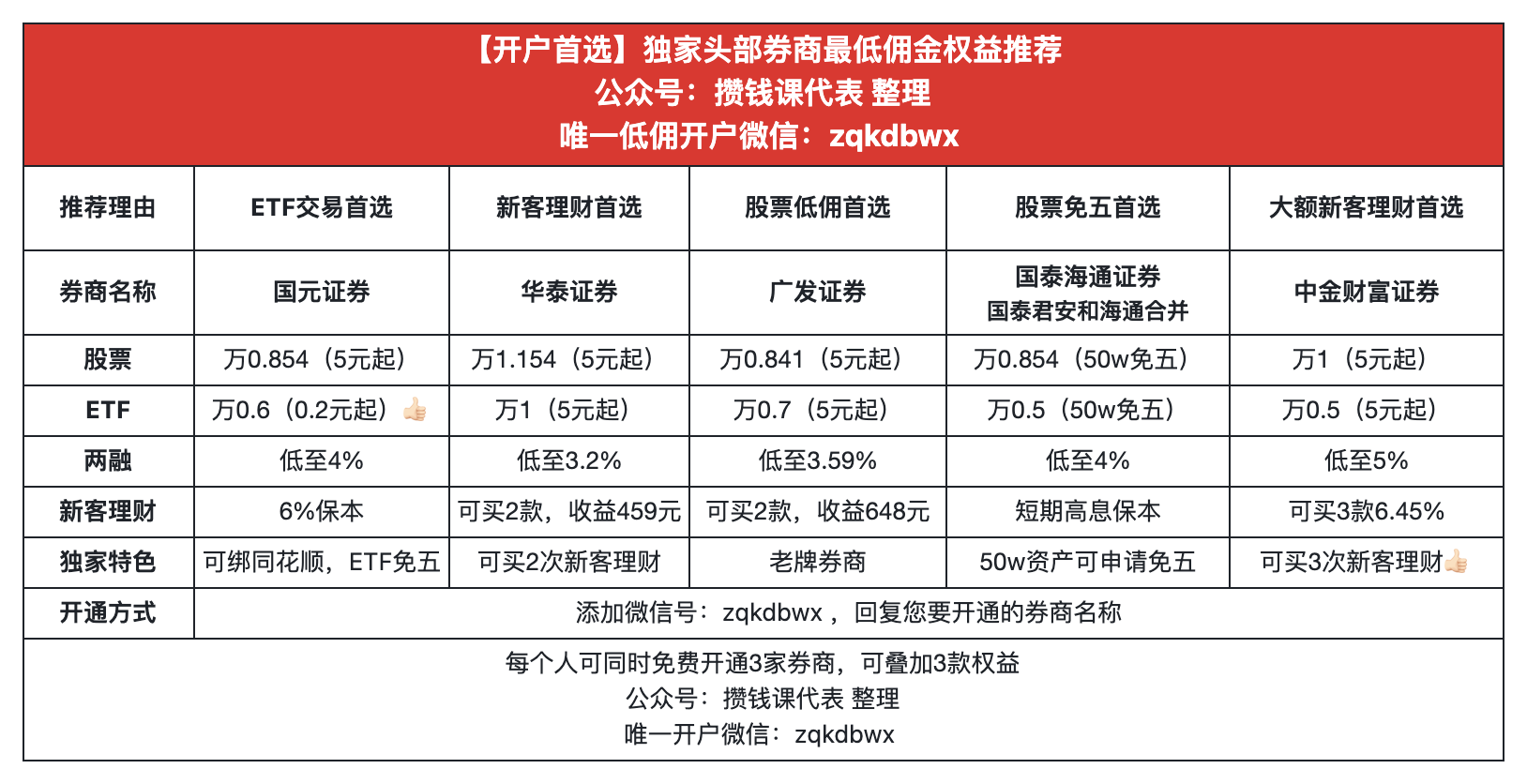
【开户必备】广发证券、银河证券、国泰海通证券等头部券商万0.6棉舞最低佣金开户,唯一低佣开户方式:添加微信号 zqkdbkh ,回复【开】。
Whenever a user starts a live blackjack table or plays a featured slot at Spin Dynasty Casino, a chain of caching decisions activates before the first pixel arrives at the screen. We’ve spent years optimizing that chain so it processes millions of requests without hindering gameplay, without serving a stale jackpot value, and without interfering with the regulatory-grade data integrity our platform runs on. The heavy lifting takes place deep inside browsers, across edge nodes, and between internal microservices, all designed to make sessions feel instant while keeping real-money transactions locked tight. Our rule is clear: cache without fear wherever the data supports, flush with surgical precision when something shifts, and never let a leftover fragment slip into a payout calculation. This article details the scaffolding that makes that feasible—browser heuristics, CDN topology, dynamic fragment assembly, and targeted invalidation—so the lobby, game loader, and cashier all operate at the speed players expect.
The Core of Advanced Caching at Spin Dynasty
Design Principles That Govern Our Cache Layer
The caching layer relies on three constraints that maintain performance high and risk low. Every cache entry holds an authoritative time-to-live that corresponds to the volatility of the data behind it, Spin Dynasty Casino Payout Time, instead of some blanket number. A set of promotional banners may stay for ten minutes, while a player’s account balance never enters a shared cache. Reads scale effortlessly because fallback strategies always hand back a functional response, even when the origin is temporarily down. A game category page loads from edge cache with a slightly older price tag while the backend rebuilds, instead of showing a blank spinner. Every write path sends targeted invalidation events that purge only the smallest slice of cache that actually changed. We never clear whole regions just because one game’s RTP label got updated. These principles shape every tool choice, from the header sets we send down to the structure of our Redis clusters.
Dividing Static from Dynamic Requests
The front-end stack blends asset fetches, API calls, and WebSocket streams, and we treat each category differently long before the client views them. Static assets—game thumbnails, CSS bundles, font files—get fingerprint hashes baked into their URLs and immutable Cache-Control directives that let browsers and CDNs store them for good. That kills revalidation requests on repeat visits. API responses that describe game metadata, lobby rankings, or promotional copy get shorter max-age values paired with stale-while-revalidate windows, so the player obtains near-instant content while a fresh copy loads in the background. Requests that mutate state—placing a bet or redeeming a bonus—skip caching entirely. Our API gateway examines the HTTP method and endpoint pattern and strips all cache-related headers when it needs to, making it impossible to accidentally cache a wallet mutation and ensuring that performance tweaks never cause financial discrepancies.
The way Browser‑Side Caching Boosts Every Session
Service Worker Magic for Offline‑Resilient Game Lobbies
A tightly scoped service worker functions on the main lobby domain, handling navigation requests and serving pre-cached shell resources. It never touches game-session WebSockets or payment endpoints, so it remains invisible to transactional flows. Once someone opens the lobby once, the shell—header bar, footer, navigation skeleton—loads from local cache before any network call completes. During idle moments, a background sync queue caches in advance the top twenty game tile images. A player revisiting on a shaky mobile connection encounters a lobby that’s immediately navigable, with featured slot tiles appearing without placeholder shimmer. The service worker follows a versioned manifest that rotates with each deployment, enabling the team push a new lobby shell without asking anyone to clear their cache. Real User Monitoring achieves lobby load times on repeat visits below 150 milliseconds.
Optimized Cache‑Control Headers for Repeat Visits
Outside the service worker, precise Cache-Control and ETag negotiation reduce redundant downloads. Every reusable response gets a strong ETag generated from a content hash. When a browser sends an If-None-Match header, our edge servers reply with a 304 Not Modified without sending the body. For API endpoints that vary infrequently—like the list of available payment methods per jurisdiction—we configure a public max-age of six hundred seconds and a stale-while-revalidate of three hundred seconds. That lets the browser reuse the cached array for up to ten minutes while silently refreshing it when the stale window starts. We skip must-revalidate on these read endpoints because that would block the UI if the origin became unreachable. Instead, we tolerate that a promotional badge might appear an extra minute while the fresh value arrives. We watch that trade-off closely through client-side telemetry. This header strategy alone cut cold-start lobby load times by forty percent compared to our original no-cache defaults.
Intelligent Cache Invalidation Without Disrupting Live Games
Event‑Driven Purging Triggered by Backend Signals
Instead of depending on time-based expiry alone, we connected the content management system and the game aggregation service to emit invalidation events. When a studio changes a slot’s minimum bet or the promotions team modifies a welcome bonus banner, the backend publishes a message to a lightweight event bus. Cache-invalidation workers monitor those topics and issue surrogate-key purges that target only the affected CDN objects and internal Redis keys. One change to a game tile initiates a purge for that specific game’s detail endpoint and the lobby category arrays that reference it—nothing else. We never wildcard-purge, which can clear hundreds of thousands of objects and cause a latency spike while the cache warms up again. The workflow is synchronous enough that the updated value shows up within five seconds, yet decoupled enough that a temporary queue backlog won’t block the publishing service. Marketing agility and technical stability coexist naturally this way.
Gentle Invalidation During Active Wagering Windows
Live roulette and blackjack tables are complex: the visual table state shifts with every round, but structural metadata—dealer name, table limits, camera angles—can be static for hours. We split these into separate cache entries and apply soft invalidation to the dynamic layer. When a round closes, the dealer system sends a new game state hash, and the API gateway uses it to build a fresh cache key. The old key stays active for an extra ten seconds so players still rendering the previous round avoid a blank screen. A background process deletes the old key once all connections referencing it have cleared. The game feed remains seamless, without the jarring frame drop that abrupt purges can produce. The static metadata layer applies a longer TTL and a webhook that only invalidates when the pit boss modifies table attributes, so a hundred rounds an hour don’t generate unnecessary purge traffic.
Dynamic Content Caching That Adjusts to Player Behavior
Tailored Lobby Tiles Without Rebuilding the World
Storing a fully personalized lobby for every visitor would be inefficient because most of the page is identical. Instead, we split the lobby into edge-side includes: a static wireframe with placeholders, and a lightweight JSON document per player that holds recommended game IDs, wallet balance, and loyalty progress. The CDN stores the wireframe globally, while the customized document is retrieved from a regional API cluster with a short TTL of fifteen seconds. The browser assembles the final view through a tiny JavaScript boot loader. We then introduced a hybrid step: pre-assemble the five most common recommendation sets and save them as full HTML fragments. When a player’s tailored set matches one of those templates, the edge delivers the fully cooked fragment directly, avoiding assembly and cutting render time by thirty percent. This mirroring technique adapts from request analytics and renews the template selection hourly, responding to trending games and cohort preferences without any operator intervening.
Proactive Prefetching Driven by Session History
We don’t rely on a click. A dedicated prefetch agent operates inside the service worker and analyzes recent session history: which provider the player launched last, which category they viewed, and the device’s connection type. If someone stayed in the “Megaways” category, the worker silently downloads the JSON configuration for the next five Megaways titles during idle gaps. On a strong Wi‑Fi connection, the agent also prepares the initial chunk of JavaScript for the game client and the most common sound sprite. All prefetched data arrives in the Cache API with a short-lived TTL so stale artifacts disappear. When the player clicks a tile, the launch sequence often ends in under a second because most of the assets are already local. We keep the prefetch scope conservative to avoid wasted bandwidth, and we follow the device’s data-saver mode by turning off predictive downloads entirely—a small move that matters for players who watch their cellular data closely.
Edge network and Edge caching Approaches for International players
Selecting the Right Edge Locations
Spin Dynasty Casino runs behind a top-tier CDN with over two hundred points of presence, but we don’t treat every location the same. We charted player distribution, latency benchmarks, and transcontinental routing fees to pick origin shield regions that safeguard the central API farm. The shield is located in a large-scale metro where several undersea cables meet, and all edge caches pull from that shield rather than hitting the origin straight. This minimizes request fan-in for popular assets and prevents cache-miss rushes during a fresh game debut. For real-time protocols like the WebSocket messaging that live dealer tables employ, the CDN acts only as a TCP intermediary that closes connections adjacent to the player, while genuine game state stays fixed in a main regional data center. Splitting duties this manner achieves sub-100-millisecond time-to-first-byte for stored static JSON data across North America, Europe, and portions of Asia, with stateful sessions keeping consistent.
SWR: Ensuring Content Current Without Latency Jumps
Stale-while-revalidate with prolonged grace intervals on non-payment endpoints altered the game for us. When a player lands on the promotions area, the edge node serves the cached HTML fragment right away and fires an async call to the origin for a fresh version. The updated copy updates the edge storage after the answer reaches, so the subsequent player views updated content. If the origin slows down during high traffic, the edge goes on providing the stale object for the entire grace interval—thirty minutes for advertising content. A one sluggish database request never spreads into a site-wide downtime. We monitor the async update latency and activate alerts if revalidation does not succeed to update within two consecutive intervals. That indicates a deeper concern with no the player ever seeing. This technique boosted our availability SLO by 0.5% while keeping content freshness within a few minutes for the majority of marketing changes.
Striking Novelty and Speed in RNG and Live Dealer Streams
Cache Policies for Game Outcome Announcements
RNG slot results and random table outcomes are calculated on the supplier end and transmitted to our system as cryptographically signed messages. Those messages must be presented precisely once and in the right order, so we manage them as transient streams, not storable items. The surrounding UI—spin button conditions, sound effect indexes, win celebration templates—changes much less frequently and profits from aggressive caching. We version these resources by game release number, which changes solely when the developer releases a new build. Until that version increment, the CDN holds the entire asset bundle with an unlimited caching rule. When a version shift occurs, our deployment process sends new resources to a fresh directory and issues a unique invalidation notice that swaps the version link in the game launcher. Older files stay reachable for current sessions, so no play gets halted mid-spin. Players get instant asset loading during the critical spin moment, and the latest game art waits for them the subsequent time they start the title.
Ensuring Real‑Time Feeds Stay Quick
Live casino video feeds operate on low-latency transport, so standard HTTP caching doesn’t apply to the media bytes. What we enhance is the messaging and chat system that works alongside the broadcast. Edge-located WebSocket gateways hold a limited buffer of the last few seconds of conversation messages and table condition alerts. When a player’s connection drops briefly, the server replays the cached messages on re-establishment, producing a feeling of continuity. That store is a brief memory store, never a persistent store, and it resets whenever the table state shifts between games so outdated wagers are not replayed. We also apply a 10-second edge cache to the list of active tables that the lobby polls every few seconds. That tiny cache soaks up a huge volume of duplicate queries without touching the main dealer system, which keeps fast for the key betting instructions. The outcome: conversation threads that seldom lag and a game list that changes rapidly enough for users to spot newly opened tables within a couple of moments.
Behind the Scenes: How We Track Cache Effectiveness
Primary Metrics We Follow Across the Stack
We probe every tier of the caching pipeline so actions come from data, not assumptions. The following indicators feed into a unified observability platform that teams review daily:
- CDN hit ratio broken down by asset type and region, with alerts if the global ratio drops below 0.92 for static resources.
- Origin-shield offload percentage, which indicates how much traffic the shield prevents from reaching the internal API fleet.
- Stale-serve rate during revalidation windows, tracked as the proportion of requests served from a stale cache entry while a background fetch is running.
- Service worker cache hit rate on lobby shell resources, collected via client-side RUM beacons.
- Invalidation latency—the duration between an event publication and the finish of surrogate-key purge across all edge nodes.
- Cache-miss cold-start time for game loader assets per continent, divided into DNS, TCP, TLS, and response body phases.
These numbers give us a accurate picture of where the caching architecture excels and where friction exists, such as a particular region with a low hit ratio generated by a routing anomaly.
Ongoing Optimization Using Synthetic and Real User Monitoring
Metrics alone fail to show how a player actually feels things, so we layer on with synthetic probes that simulate a full lobby-to-game sequence every five minutes from thirty globally distributed checkpoints. The probes trace real user paths: landing on the lobby, browsing a category, launching a slot, and checking the cashier. They measure Lighthouse performance scores, Largest Contentful Paint, and Cumulative Layout Shift triggered by cached elements reflowing. At the same time, real user monitoring captures field data—specifically the timing of the first lobby tile to become usable and the length between the game-launch tap and the first spin button appearing. When a regression surfaces, we cross-reference it with the cache hit ratio and stale-serve telemetry to figure out whether an eviction spike, a slow origin, or a CDN configuration drift triggered it. That feedback loop lets us adjust TTLs, prefetch lists, and edge-include strategies every week, ensuring the caching system aligned exactly with how players actually move through Spin Dynasty Casino’s always-evolving game floor.
最新理财攻略,请添加微信号:zqkdbkh ( 攒钱课代表 )。
【限时福利!最低佣金开户!】
如何获得国资万0.8棉5的最低佣金开户机会?
开通方式 ①:添加攒钱课代表(微信号:zqkdbkh )回复【券商开户】;
开通方式 ②:关注公众号【攒钱课代表】或【存钱课代表】,回复 【 券商 】。
【牛市来了!限时最低佣金开户!】
加攒钱课代表极速开户,微信:zqkdbkh
更多的理财套路揭秘和防坑指南,请关注公众号「 攒钱课代表 」免费领取最新年化8%理财攻略。(彩蛋:关注公众号「 攒钱课代表 」后回复数字8.)
【重要通知】
如何获得高息存款开通资格?添加微信:攒钱课代表( zqkdbkh )、存钱课代表( dykhzs )回复【存款】获取;
如何获得高息存款开通资格?添加微信:攒钱课代表( zqkdbkh )回复【存款】获取;
⭐️以上理财干货已由公众号【攒钱课代表】 进行人工审核,确保真实有效,可放心浏览。